

Disease Overview
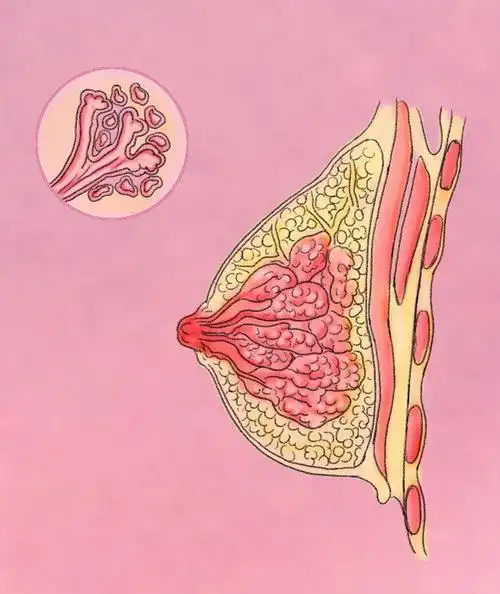
Breast cancer is one of the most common malignant tumors in women and is rare in men. It most commonly occurs in the upper outer quadrant, with invasive ductal carcinoma being the predominant type. Early diagnosis and treatment are critical for prognosis.
Main Causes
Hormone-related: Early menarche, late menopause, nulliparity or late childbearing, long-term hormone replacement therapy.
Genetics: BRCA1/2 and other germline mutations and family history.
Lifestyle: Obesity, lack of exercise, alcohol consumption.
Environmental and radiation: Long-term ionizing radiation exposure, etc.
Common Symptoms
Breast lump: Usually painless, solitary, hard texture, unclear borders, poor mobility.
Nipple and areola changes: Retraction, deviation, erosion, discharge (bloody or serous).
Skin changes: Dimpling sign, orange peel appearance, satellite nodules, or redness (inflammatory type).
Axillary lymph node enlargement; advanced stages may show distant metastasis.
Molecular Subtyping and Staging(AJCC)
Molecular subtypes: Luminal A/B (hormone receptor-positive), HER2-positive, triple-negative, etc., guiding endocrine, targeted, and immunotherapy.
TNM staging: T (tumor size/local invasion), N (regional lymph nodes), M (distant metastasis), comprehensively classified as stages 0-I-IV.
Diagnosis and Treatment Key Points
Screening: General population undergoes annual ultrasound after age 40 plus mammography every 1-2 years; high-risk populations start earlier and add MRI.
Definitive diagnosis: Image-guided biopsy, complete immunohistochemistry and molecular testing.
Treatment strategy: Primarily surgery(breast-conserving or mastectomy);supplemented with radiotherapy, chemotherapy, endocrine therapy, and targeted therapy based on molecular subtyping(such as anti-HER2)and immunotherapy. Neoadjuvant/and adjuvant therapy are individualized based on staging and molecular subtyping.
Prevention and Follow-up
Maintain healthy weight and exercise, balanced diet, limit alcohol.
Avoid unnecessary long-term exogenous hormone use;. Encourage30childbearing before age ... and breastfeeding.
After treatment, regularly review imaging and tumor markers, and monitor for recurrence and treatment-related adverse reactions.
Breast cancer is no longer a ‘terminal disease.’ Its5-year survival rate is far more optimistic than most people imagine.Coupled with the popularization of precision treatments such as minimally invasive interventional therapy, many patients can even avoid surgery and chemotherapy, living normal lives with long-term survival.
Let me first offer some reassurance, letting the data speak—Breast cancer’s5-year survival rate fundamentally depends on staging: the earlier it is detected, the greater the hope of cure.原 in cancer mortality癌For Stage 0 (the earliest stage), the5-year survival rate reaches as high as98%, meaning that virtually all early-stage patients, after standardized treatment, can recover fully and have a life expectancy no different from normal;Ⅰfor Stage I breast cancer, the5-year survival rate is approximately92%,Ⅱ; for Stage II, approximately81%; even atⅢStage III, the5-year survival rate reaches67%; onlyⅣStage IV (advanced) drops to27%, but even then, precision treatment can effectively prolong survival and improve quality of life.These data represent the confidence accumulated from countless clinical cases and are the source of our confidence in fighting breast cancer.

When breast cancer treatment is mentioned, most people likely picture ‘surgical removal of the breast’ or ‘hair loss from chemotherapy,’ which is also the main reason many patients resist treatment.But now,treatment is no longer a ‘one-size-fits-all’ era.Beyond traditional surgery and chemoradiotherapy, minimally invasive precision interventional therapy is playing an increasingly important role, truly making ‘surgery-free and chemotherapy-free’ treatment a reality.
For small early-stage tumors, we can use minimally invasive ablation to precisely ‘eliminate’ cancer cells using high or low temperatures, with only a needle-puncture woundsize, allowing the patient to get out of bed the day after the procedure, without the need for mastectomy or enduring the side effects of chemotherapy;
for mid-to-late stage patients who cannot undergo surgery, interventional embolization can block the tumor’s blood supply, ‘starving’ the cancer cells, combined with targeted therapy and immunotherapy to precisely strike at the tumor while maximally protecting normal tissue.
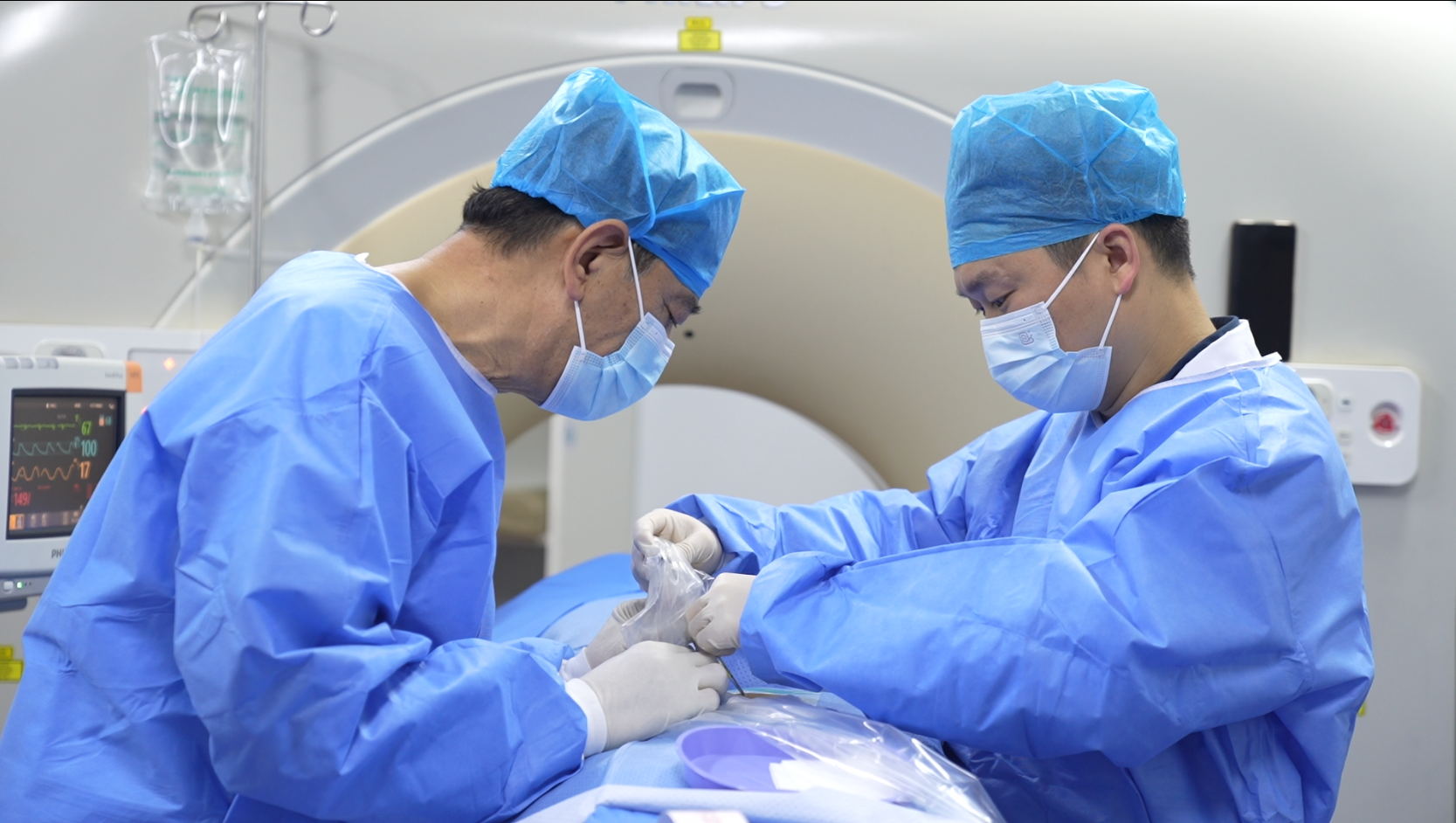
As an oncologist, I want to remind everyone: the key to fighting breast cancer has never been about ‘how advanced the treatment is,’ but rather ‘how early it is detected.’
Many patients miss the optimal treatment window because they ignore early warning signs. By the time an obvious lump, skin dimpling, or ulceration and bleeding appear, the disease has often progressed to mid-to-late stage.I would like to remind everyone here:women should start at age40, have an annual breast ultrasound, and every2~3years undergo amammography screening; those with a family history of breast cancer, early menarche, or late menopausehigh-risk populationsshould begin screening as early as35years of age.You can also perform self-examination while bathing by feeling for painless lumps in the breast and checking for abnormal nipple discharge. If any issues are found, seek medical attention promptly. Early detection, early diagnosis, and early treatment are the only ways to nip cancer in the bud.