




Disease Overview
Prostate cancer is a common malignant tumor of the male genitourinary system, predominantly acinar adenocarcinoma (>95%). Incidence increases significantly with age; it is often asymptomatic in early stages, and screening aids early diagnosis.
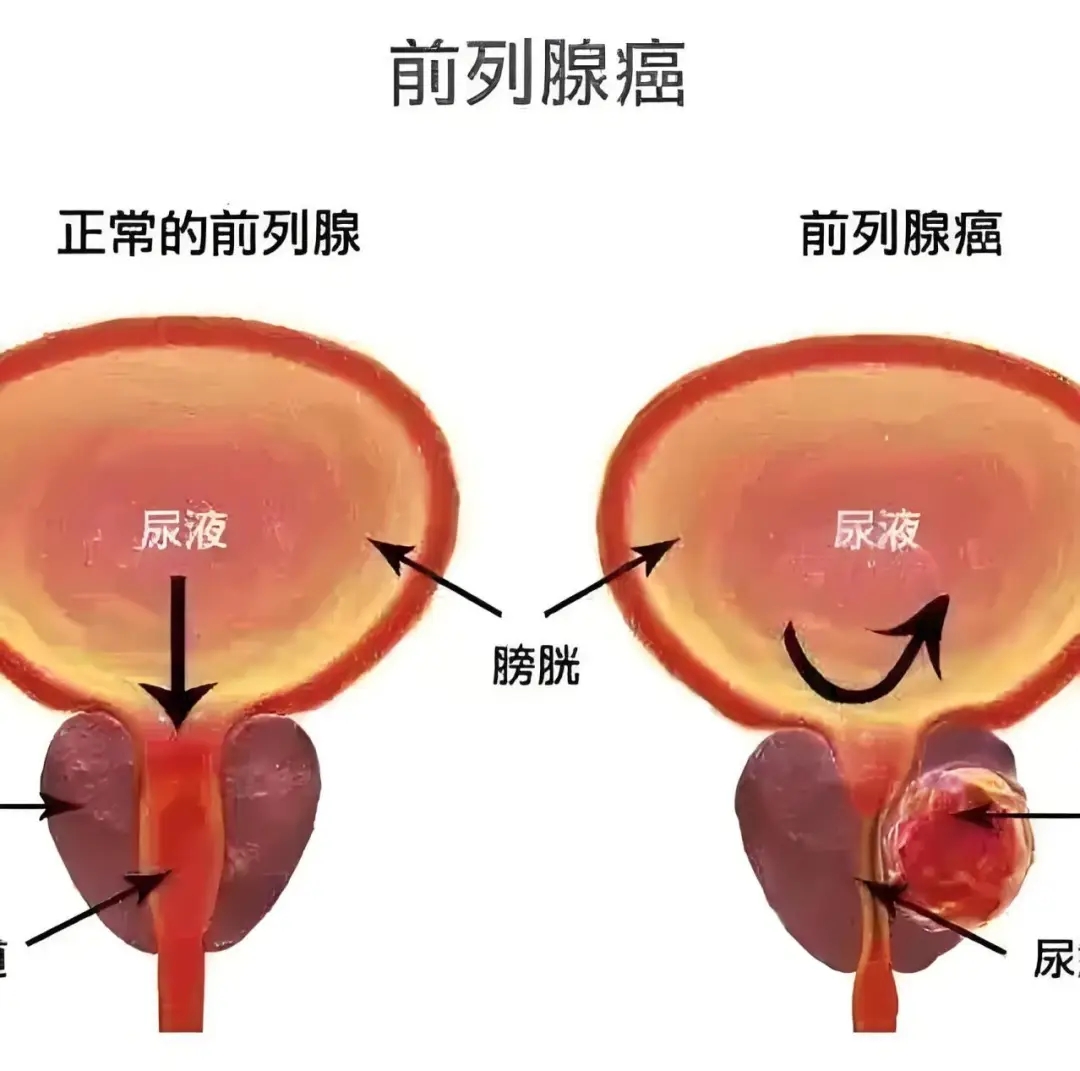
Main Causes
Age: Risk increases significantly after age 50.
Genetics: BRCA1/2, HOXB13, and other germline mutations and family history.
Racial and geographic differences: African Americans have higher risk.
Lifestyle: Obesity, high-fat diet, sedentary lifestyle, smoking and drinking.
Hormone-related: Long-term androgen exposure.
Common Symptoms
Lower urinary tract symptoms: Urinary frequency, urgency, slow stream, straining, urinary retention.
Local and systemic: Pelvic discomfort, erectile dysfunction, hematospermia.
Advanced stage: Bone pain (spine/pelvis/proximal femur), spinal cord compression, pathological fractures; lymph node or visceral metastasis.
Grading and Staging(AJCC/Gleason与Grade Group)
Gleason score and Grade Group: GG1 (≤6) indicates lower risk with low differentiation; GG2-GG5 are intermediate to high grades.
TNM staging: T (prostate capsule invasion), N (regional lymph nodes), M (distant metastasis), comprehensively classified as stages I-IV; combined with PSA and Grade Group for risk stratification (low/intermediate/high/very high risk).
Diagnosis and Treatment Key Points
Screening: Men over 50 (earlier for high-risk) undergo regular PSA and digital rectal examination (DRE); gray zone or suspicious cases undergo mpMRI and targeted biopsy.
Definitive diagnosis: Prostate biopsy is the gold standard; complete PSA, imaging, and pathological grading.
Treatment strategy: Very low/low risk may undergo active surveillance; localized disease may undergo radical prostatectomy or radiotherapy; intermediate-high risk/locally advanced emphasizes surgery/radiotherapy with endocrine therapy; metastatic disease centers on androgen deprivation therapy (ADT), combined with novel endocrine agents, chemotherapy, and PARP inhibitors.
What are the Common Interventional Treatment Methods for Prostate Tumors?
1.Prostatic Artery Embolization(PAE)
Simple understanding:“Block the tumor's‘supply route’,to cause ischemia and shrinkage”.
How it's done
①Arterial puncture from the thigh or wrist,;
②advancing a thin catheter into the prostatic arterial supply,;
③injecting micro-embolic particles to reduce tumor blood supply.;
What conditions is it suitable for??
①Advanced or recurrent prostate cancer;;
②tumor causing recurrent hematuria;;
③significant urinary obstruction but unable to undergo surgery;;
④elderly patients or those in poor physical condition.;
Main effects:
①controlling hematuria,;
②relieving urinary difficulty,;
③and improving quality of life.
⚠️ It should be noted: this type of treatment is mostly palliative or adjunctive, not a curative approach.
2.Image-guided local ablation therapy
Core concept: ‘Precisely target the lesion while preserving function as much as possible.’
Common methods include:
①Cryoablation,;
②microwave or radiofrequency ablation,;
③high-intensity focused ultrasound (HIFU).(HIFU);
Suitable patients:
①localized prostate cancer;;
②local recurrence after surgery or radiotherapy;;
③patients who wish to minimize the impact on urinary continence and sexual function.;
Advantages:
①minimal trauma,;
②fast recovery,;
③relatively less damage to normal tissue.;
Currently, this type of treatment is still evolving, and strict patient selection is required.
IV. Can interventional therapy ‘cure’ prostate cancer??
This is the question patients care about most.
To be honest: in most cases, interventional therapy is not a curative approach.
Its main value lies in:
①reducing tumor burden,;
②relieving symptoms,;
③combining with endocrine therapy, radiotherapy, and pharmacotherapy,;
④and helping patients live better and better tolerate subsequent treatments.;
Prostate cancer treatment emphasizes multidisciplinary collaboration,(MDT)and interventional therapy is an important component of this approach.
V. Which patients may consider interventional therapy??
✔ Advanced or recurrent prostate cancer;;
✔ presence of significant hematuria or urinary obstruction;;
✔ not suitable for surgery or radiotherapy;;
✔ wishing to reduce trauma while controlling symptoms;;
✔ 经MDTthose assessed as having clear benefit.;
Prevention and Follow-up
Maintain a healthy weight and exercise regularly; reduce high-fat foods and excessive dairy intake; limit alcohol and tobacco.
Genetichigh-risk populationshigh-risk individuals should undergo genetic testing and counseling for early screening and diagnosis.
After treatment, regular follow-upPSAincludes PSA monitoring and imaging assessment, paying attention to signs of biochemical recurrence and metastasis,;and managing treatment-related effects such as urinary incontinence and sexual dysfunction.
If needed, I can also create supporting materials such as ‘Patient Q&A Booklets,’ ‘Early Screening Reminder Lists,’ and ‘Follow-up Reminder Forms’ for any of the above disease types, or integrate all five into a single volumePDFfor distribution.